
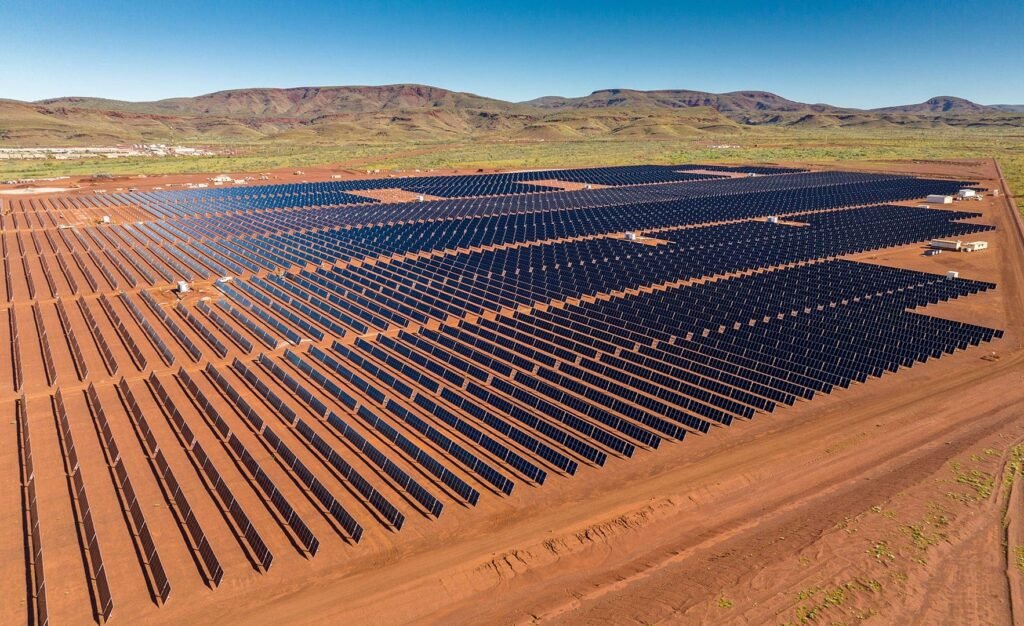
Drones for Solar Farm Inspection
Introduction:
As demand for renewable energy sources grows, the need for quick, consistent inspections is rising. Photovoltaic thermography is diagnostically valid only under a narrow set of conditions that hold for only a few hours a day.
Historically, a utility-scale site could not be covered inside that window, so operators either sampled a portion of the array or spread capture across several days under shifting irradiance, ambient temperature and wind. Both approaches produce an incomparable dataset.
DJI drones and software have evolved to improve operational efficiency for solar panel inspections to close that gap.
Background and Pain Points:
• Sampling instead of coverage: A utility-scale array contains tens of thousands of modules across large farms. To improve inspection efficiency, standard industry practice has been to test a 10–25% sample and infer the condition of the rest. Faults outside the sample stay hidden until they result in a drop in power generation.
• Narrow capture window: IEC TS 62446-3 requires a minimum in-plane irradiance of 600 W/m². In practice, this means capturing within a few hours of solar noon, under clear or lightly hazy sky, with low wind. At southern Australian latitudes in winter, that window is short or does not open at all.
• Single image analysis. Conventional thermal workflows produce thousands of discrete radiometric images which were previously reviewed individually. This makes aggregate temperature measurements across the site or an auditable project record difficult
System Introduction
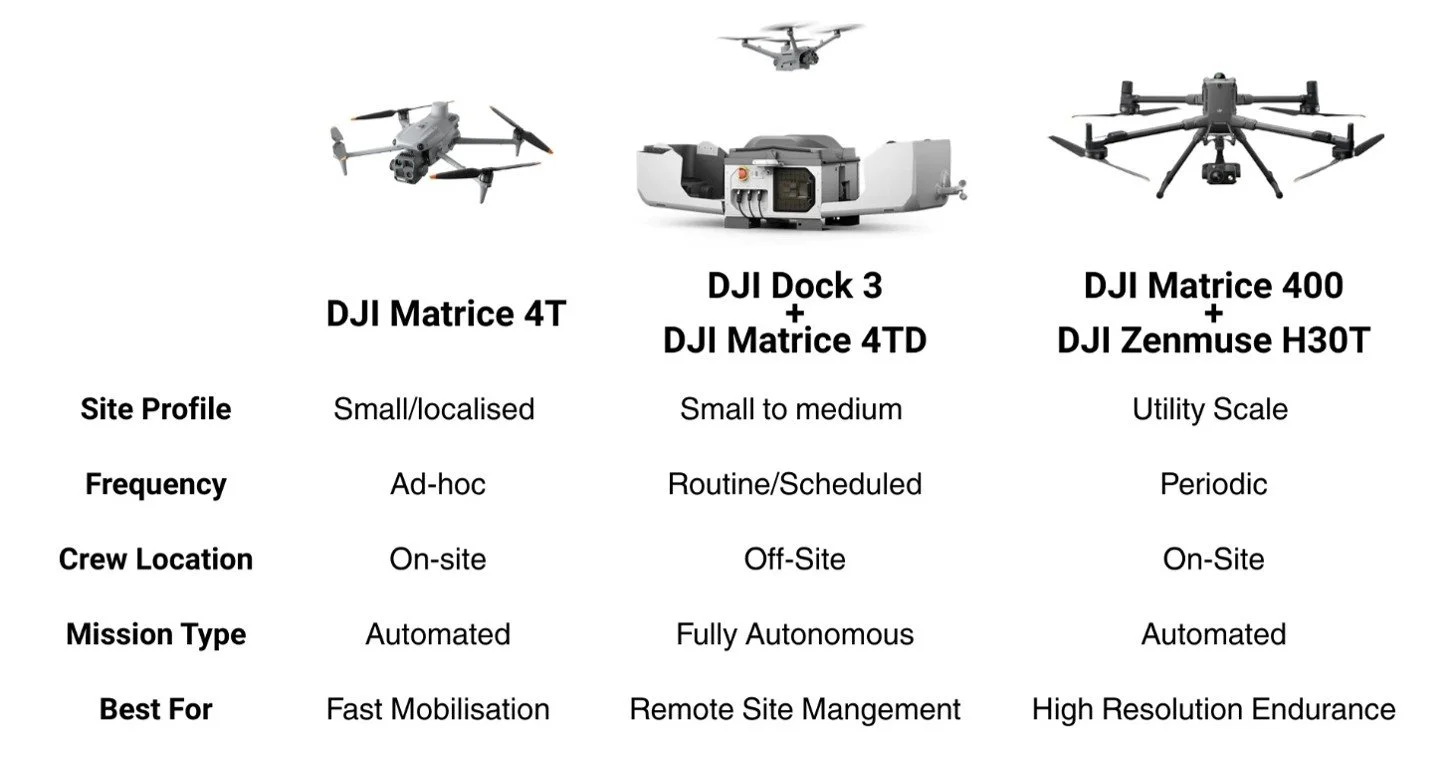
DJI offer three configurations for solar panel inspections. The right system is determined by site size, inspection frequency and capture window.
All three configurations feed into DJI Terra for:
· Thermal Reconstruction
· Temperature Analysis
· Inspection Record Generation
Key Features
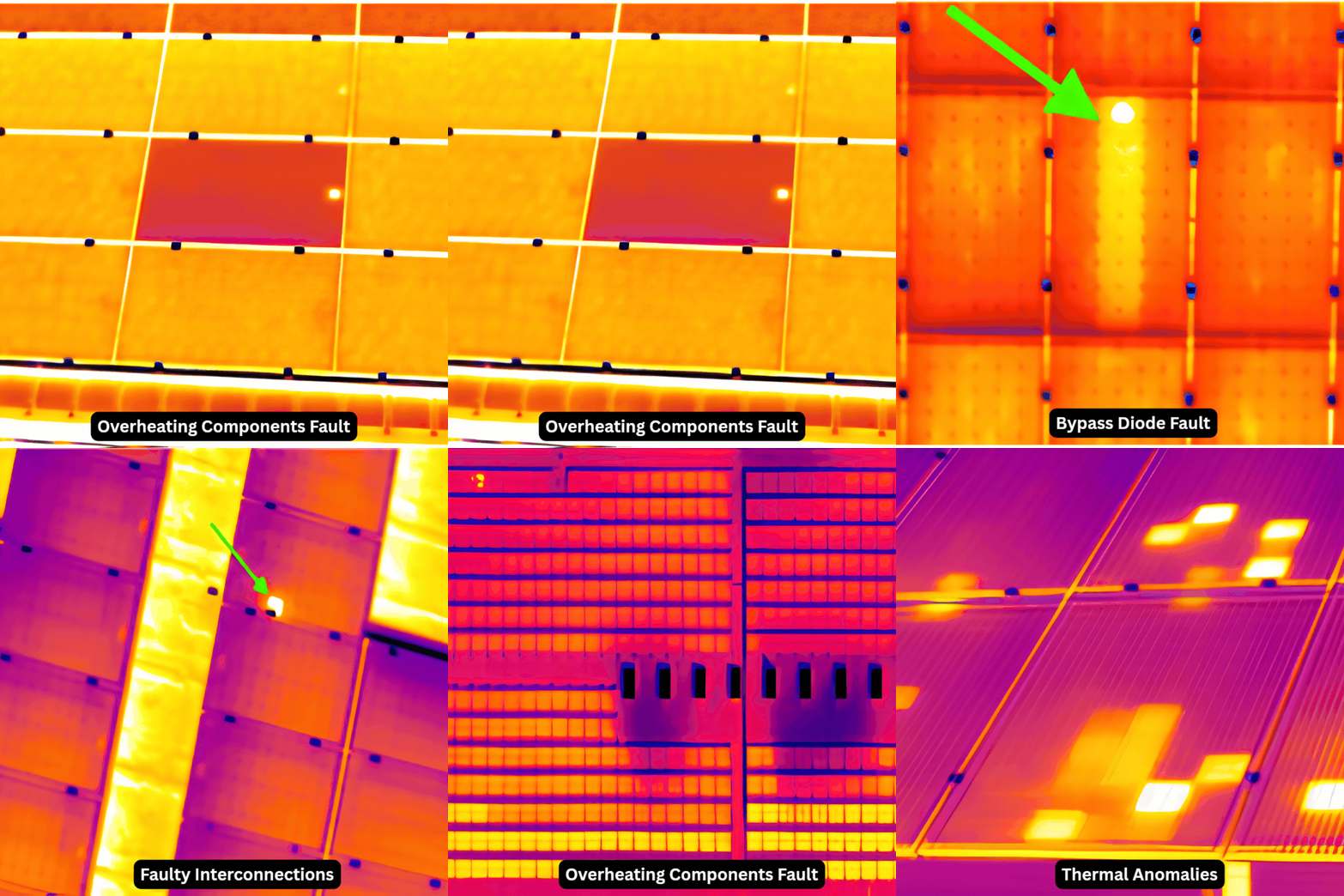
Key defects identified:
· Cell-level hotspots
· Bypass diode failures
· String and substring outages
· Junction box and connector overheating
· Module cracking and delamination
· Soiling and vegetation shading
· Tracker or inverter faults.
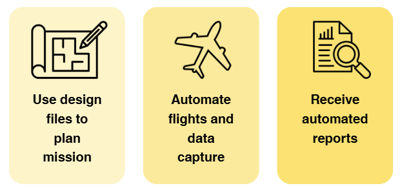
• End-to-End capture and analysis: The combination of DJI hardware and software systems creates a seamless workflow for solar asset inspections.
600 W/㎡
minimum in-plane irradiance for diagnostically valid thermal capture
100%
of modules inspected each cycle, against a 10–25% manual sample
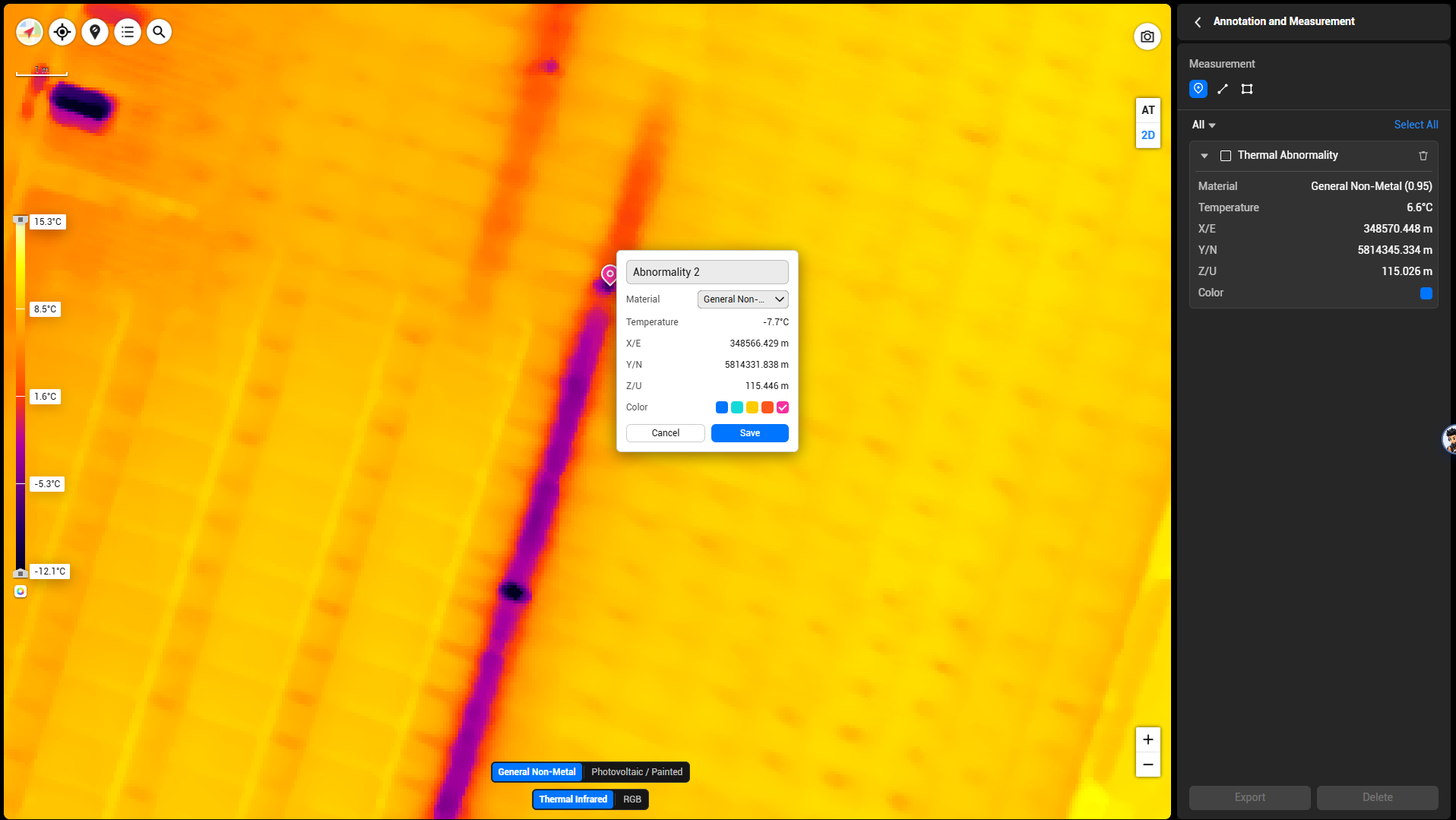
Site-wide thermal reconstruction: DJI Terra generates a single 2D thermal map with full temperature data across the array. Point, line and area temperature measurement is available directly on the map, across ten selectable colour palettes.
Results
• Increased Inspection Frequency: The DJI Dock 3 + DJI Matrice 4TD combo seamlessly increases inspection frequency of small-to medium remote sites, directly increasing operation efficiency and reducing costs.
• Coverage replaces inference. Every module in the array is inspected, so faults are found on the inspection cycle instead of surfacing later as unexplained generation loss.
• Auditable reporting: Inspection output exports directly from DJI Terra, producing the documented record required for warranty claims, insurance, and periodic compliance reporting.
• Data that holds up: Capture is planned around the IEC TS 62446-3 irradiance requirement and flown to repeatable parameters, producing a dataset that is internally consistent and comparable.
• Endurance that buys coverage: The Matrice 400 delivers up to 59 minutes of forward flight carrying the Zenmuse H30T, which reduces the number of flights needed.
• A site picture, not an image library: Thermal reconstruction resolves the flight into one georeferenced temperature map with measurable anomalies and an exportable inspection record for asset management.
59 min
flight time, M400 with Zenmuse H30T
7
defect types identified from a single capture