
DJI Agras Spraying Drones for Australian Farming
Advanced spraying, spreading and lifting solutions designed for modern agricultural operations.
DJI Agras T100
Heavy-Duty Performance for Large-Scale Farming

DJI Agras T100 – Heavy-Duty Agricultural Drone for Large-Scale Farming
Explore the DJI Agras T100 heavy-duty agricultural drone for large-scale Australian farming, combining precision spraying, spreading and lifting applications.
The DJI Agras T100 is a heavy-duty agricultural drone designed for large-scale farming and professional crop management in Australia. Its versatile platform supports high-capacity spraying, spreading and agricultural lifting applications.
Built for demanding field workflows, the T100 combines advanced sensing and flight assistance with flexible agricultural application systems. It helps Australian farming businesses and contractors manage crop protection, resource spreading and heavy-duty farm operations from one platform.
- 100 L spraying tank, 150 L spreading tank and up to 100 kg lifting (subject to applicable operating limits)
- Up to 40 L/min spraying and 400 kg/min spreading under DJI test conditions
- 20 m/s maximum operating speed
- Coaxial dual-rotor design with 62-inch carbon fibre propellers
Ideal for: large-scale operations that also need heavy lifting.
Performance at a Glance
Explore the key specifications that define spraying, spreading, and operational performance.
T100 Field Applications
See the T100 in action across large-scale spraying, spreading and lifting applications.
Terrain Sensing and Field Awareness
LiDAR, radar and vision-based sensing help pilots understand the aircraft’s surroundings while working around changing terrain and field boundaries. Flight planning, clearance and obstacle checks remain essential.
Spraying, spreading and lifting use different equipment configurations. This footage highlights the T100’s field applications rather than replacing the operating specifications above.
Precision Spraying at Scale
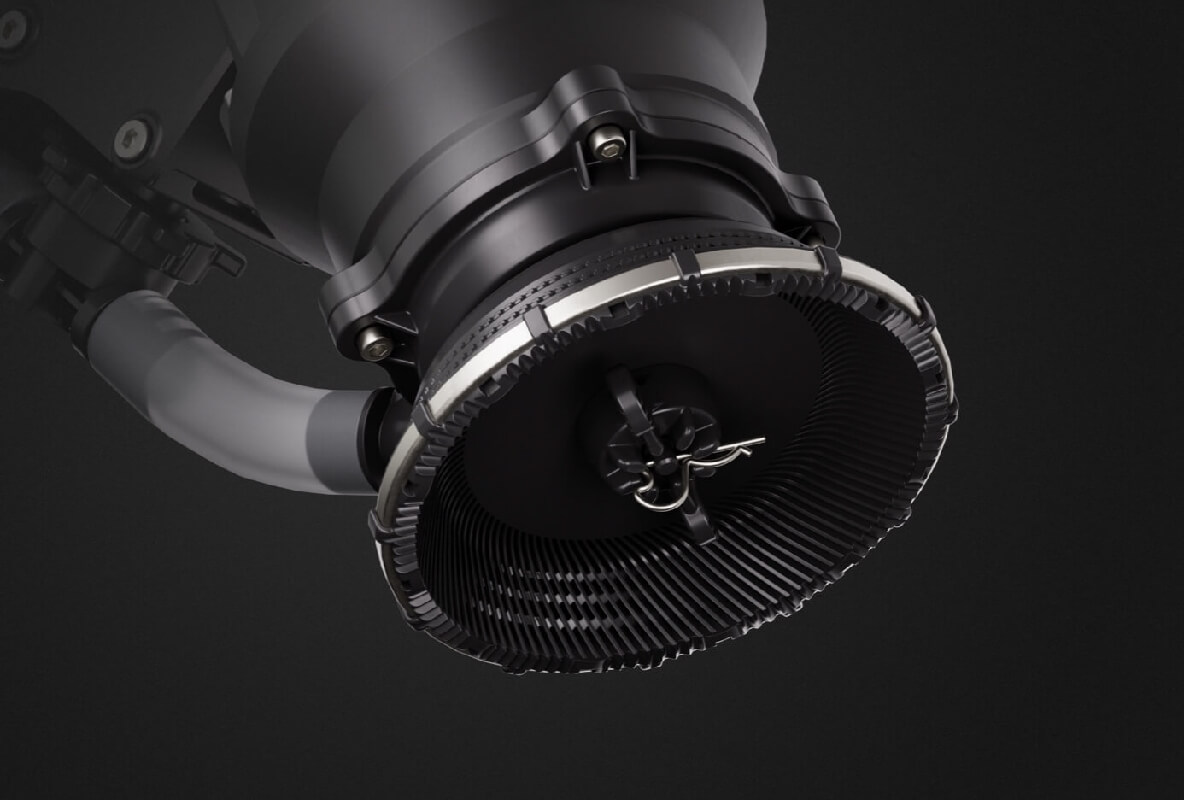
Explore five T100 spraying-system components, shown with official DJI imagery and product information.
Powering Every Mission
Reliable battery performance and efficient charging solutions designed to keep agricultural operations moving.

DB1580 Intelligent Flight Battery
30 Ah, warranty coverage for up to 1,500 charging cycles.

DB2160 / DB2212 Intelligent Flight Battery
41 Ah, warranty coverage for up to 1,500 charging cycles.

C12000 Intelligent Power Supply
12,000 W fast charging from three-phase power.

C10000 Intelligent Power Supply
9,000 W fast charging from single-phase power.

D14000iE Inverter Generator
11,500 W fast charging and 1,500 W AC output.
Choose the Right DJI Agras Drone for Your Farm
Compare the DJI Agras T100, T70P, T50 and T25P agricultural spray drones available to explore in Australia. Each model offers different spraying, spreading and operational capabilities. Use this guide to understand the key differences and identify a suitable DJI Agras drone for your farming requirements.
FAQ
Practical insights into agricultural drone spraying, spreading and field operations.
How do I work out the right spray rate for a job?
Start with the chemical label or permit, not the drone's maximum flow rate. Check the required water volume per hectare, application rate and any droplet-size or spray-quality directions. Then set the flight speed, spray width and flow to deliver that volume consistently. Test the setup and check coverage before treating the whole field. A wider swath or faster flight isn't useful if it compromises the application.
What should I check before starting a spraying flight?
Walk through the job before launching. Check the forecast and actual conditions at the paddock, nearby sensitive areas, people and livestock, trees, powerlines and other obstacles. Inspect the aircraft, batteries, pumps and atomisers for faults or blockages. Confirm the field boundary, flight route, return-to-home behaviour and emergency landing area. For chemical jobs, also check the label, required protective equipment and spill procedures.
When is it too windy to spray with an agricultural drone?
There's no single wind-speed limit that suits every spray job. The product label or permit, droplet size, weather conditions and state or territory rules all matter. Watch for gusts, changing wind direction and conditions that increase drift risk, including temperature inversions. Measure conditions where you're working and stop if they fall outside the permitted range. Don't assume calm-looking conditions mean spraying is safe.
Can a DJI Agras drone follow uneven ground or work around trees?
DJI Agras models offer terrain-sensing and obstacle-detection features, but their capability varies by model and operating mode. Steep slopes, branches, wires, uneven crops and poor visibility still need careful planning. Review the actual flight area, use suitable terrain settings and keep a safe margin around obstacles. Detection systems assist the pilot; they do not make a flight obstacle-proof.
Can I spread any fertiliser or seed through the spreading system?
Not automatically. Granule size, shape, moisture content and flow behaviour can change how evenly material feeds and spreads. Use the feeder and spreading setup specified for the material and check compatibility against the relevant DJI guidance. Calibrate the discharge rate and spreading width with the actual product before starting a large job. Damp or mixed-size granules may need extra attention to avoid blockages and uneven coverage.
How much work can I realistically get done on one battery?
A battery figure on a specification sheet won't tell you how many hectares you'll finish. Flight time varies with payload, conditions, flight speed, route and how often the aircraft must turn or climb. For a realistic estimate, include travel to the field, battery swaps, refilling, charging and cleaning. A short test run at your intended application rate is often more useful than relying on a best-case flight-time figure.
Why does the actual spraying width differ from the published figure?
Published spray-width figures are measured under particular conditions. The effective width in your paddock can change with height, speed, droplet settings, wind and crop canopy. Don't simply space flight lines at the widest advertised figure. Check the setup and assess coverage and overlap at the application rate you need, following the product label or permit and the equipment instructions.
Can I spray agricultural chemicals with a drone anywhere in Australia?
No. First check whether the product label or an applicable permit allows the intended aerial or spot-spraying use, including the specified rates and conditions. Drone operation is regulated by CASA, while chemical application rules and licensing differ between states and territories. Your aircraft, operation and pilot may require particular credentials or approvals. Confirm the rules for the state and property before planning a chemical application. See CASA and the relevant state or territory agriculture authority.
Enquire About the DJI Agras T100
EE Group is an authorised DJI Agriculture distributor in Australia. Contact us for product enquiries or assistance connecting with an authorised reseller.