
Transforming Wheat Crop Protection with DJI Agras T100 in Australia
Wheat Growing Regions and Seasonal Conditions in Australia
16 October, 2026
DJI Agras T100
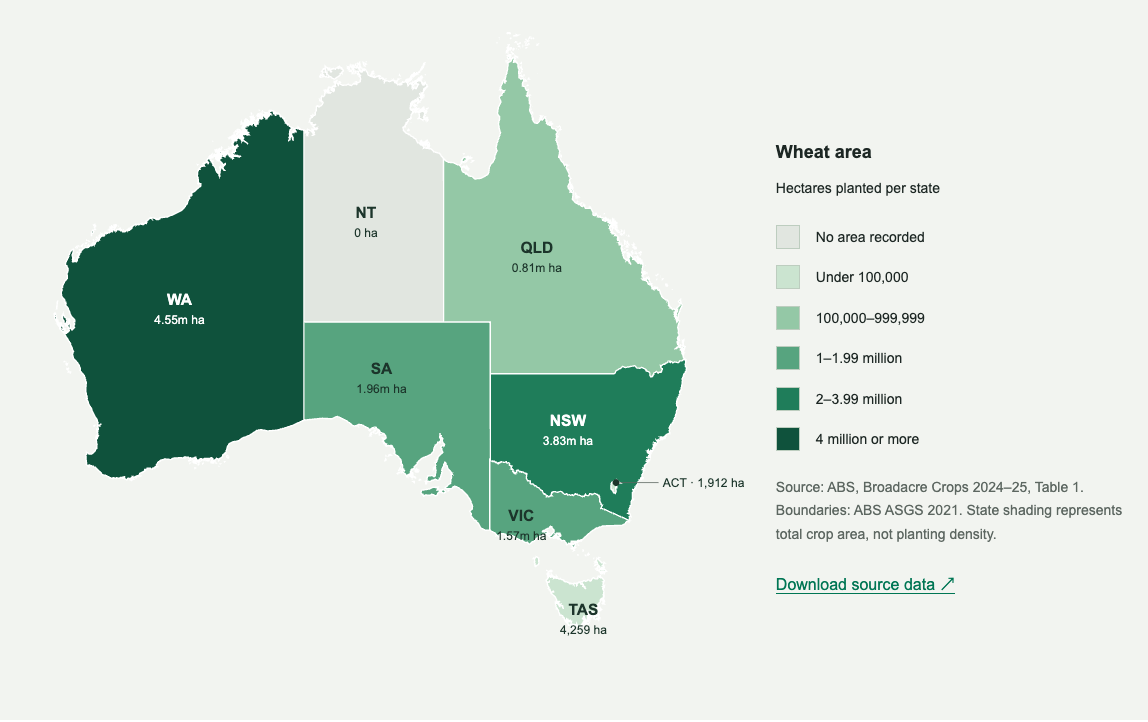
Wheat is Australia’s largest winter crop, grown mainly across the country’s southern and eastern agricultural regions. In 2024–25, Western Australia and New South Wales had the largest planted areas, at approximately 4.55 million and 3.83 million hectares respectively, followed by South Australia, Victoria and Queensland. Most Australian wheat relies on rainfall, with sowing generally taking place between April and June. Crops develop through winter and spring before harvest, with seasonal rainfall and temperature influencing growth, yield potential and the timing of crop protection.
Across the wheat fields of southern New South Wales, growers face a familiar challenge: protecting their crops when timing matters most.
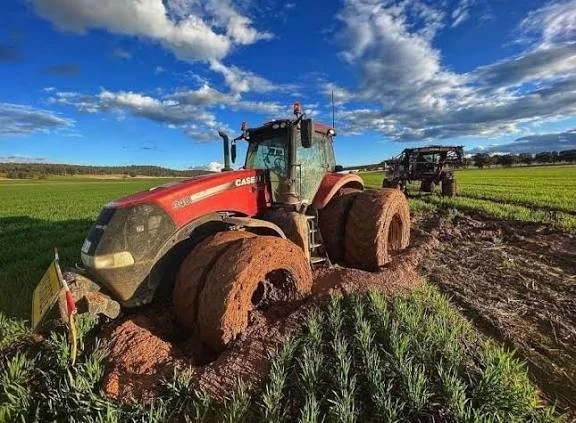
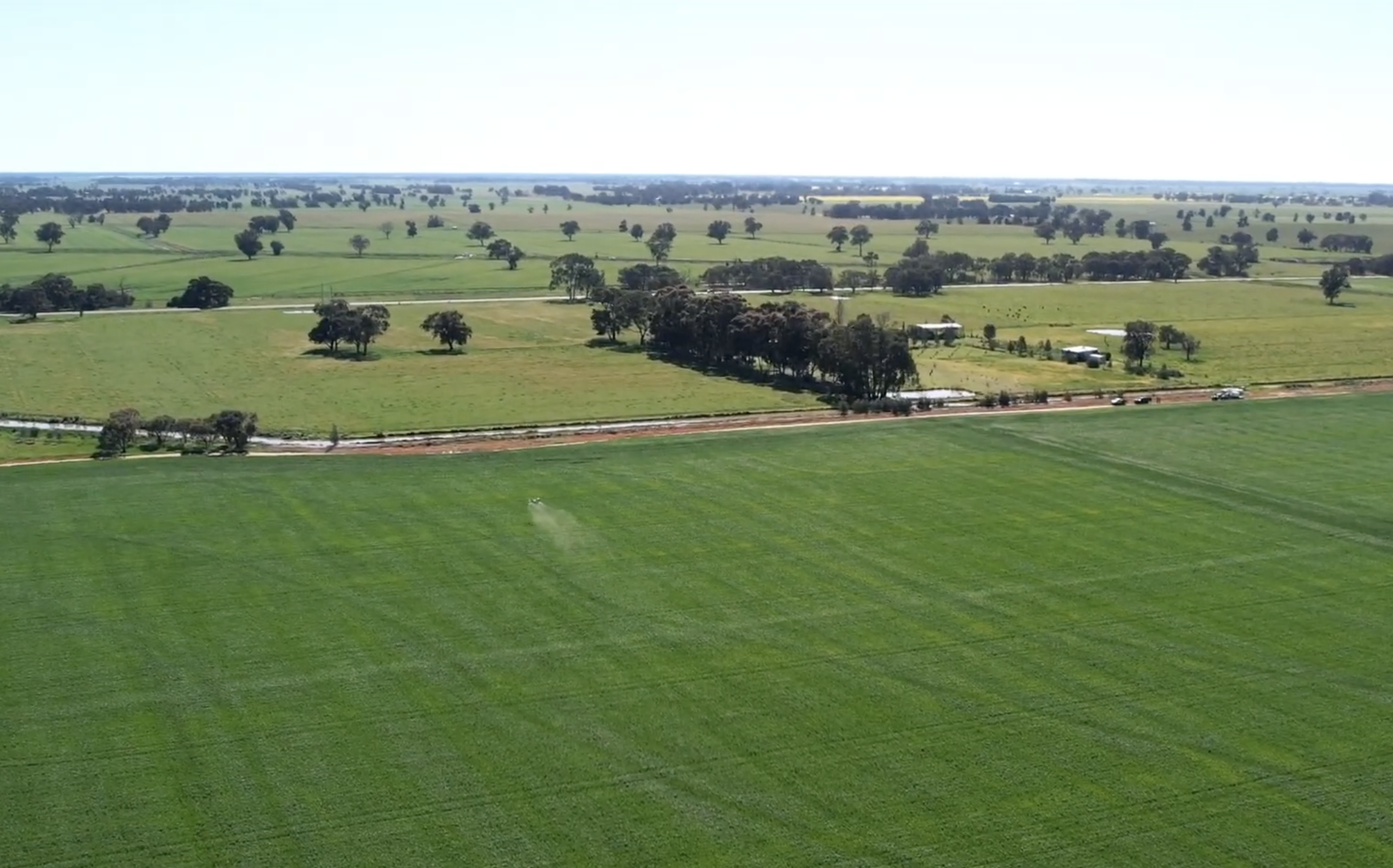
In Deniliquin, Phil’s family farm spans 2,500 hectares, including 1,500 hectares of wheat. Managing crops at this scale requires careful coordination throughout the growing season. After rain, soft ground can keep conventional sprayers out of the paddock, delaying treatments when crops need attention.
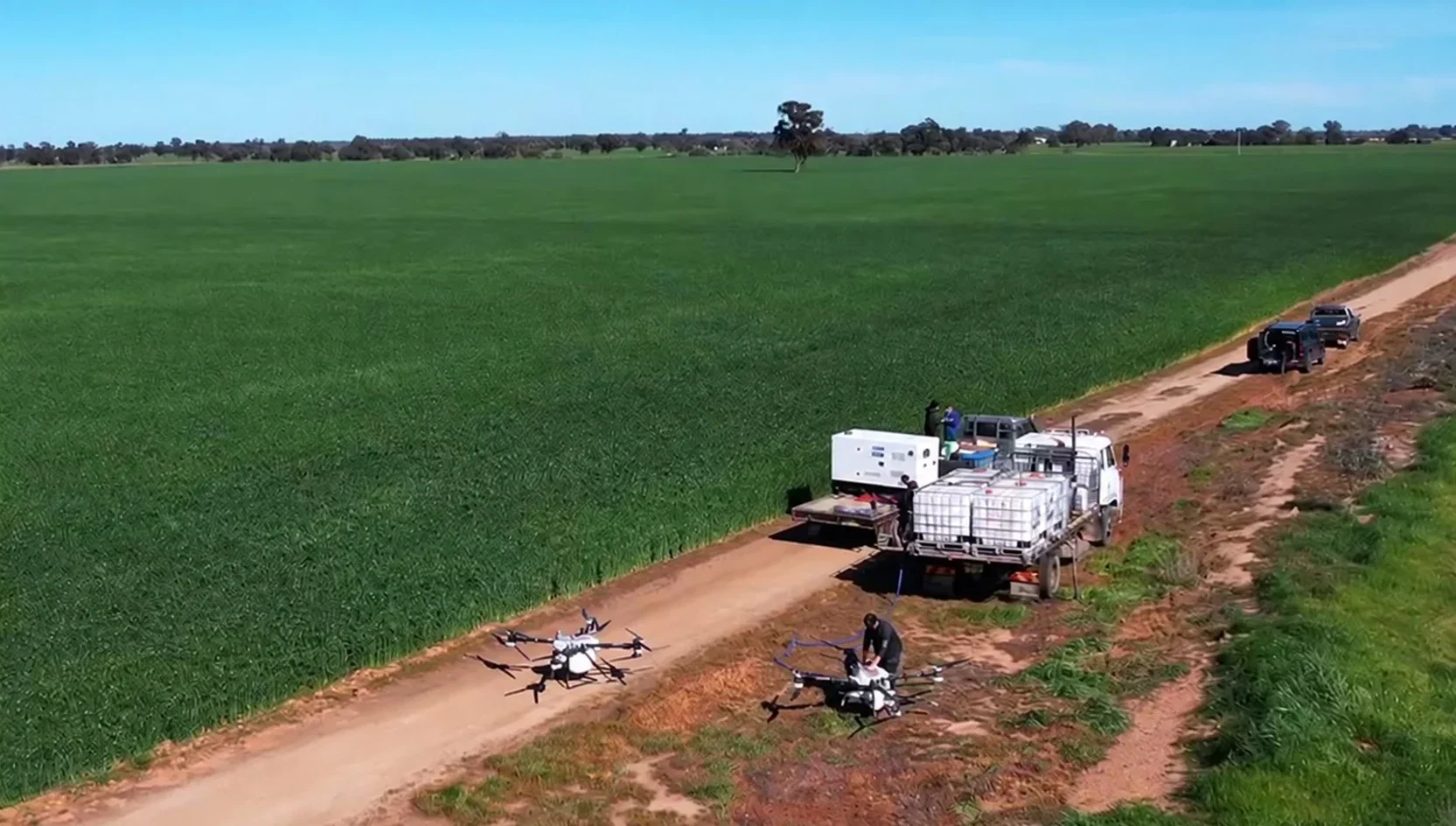
The DJI Agras T100 offers another way to reach those fields. Using two drones, Phil’s team completed a reported 235-hectare flag-leaf fungicide application in seven hours. This case study explores how drone spraying fits into the farm’s wheat operation, from earlier access after rain to reduced spray-liquid handling and estimated operating costs. It examines the results, practical requirements and limitations, offering wheat growers a closer look at where drone technology can support timely crop protection.
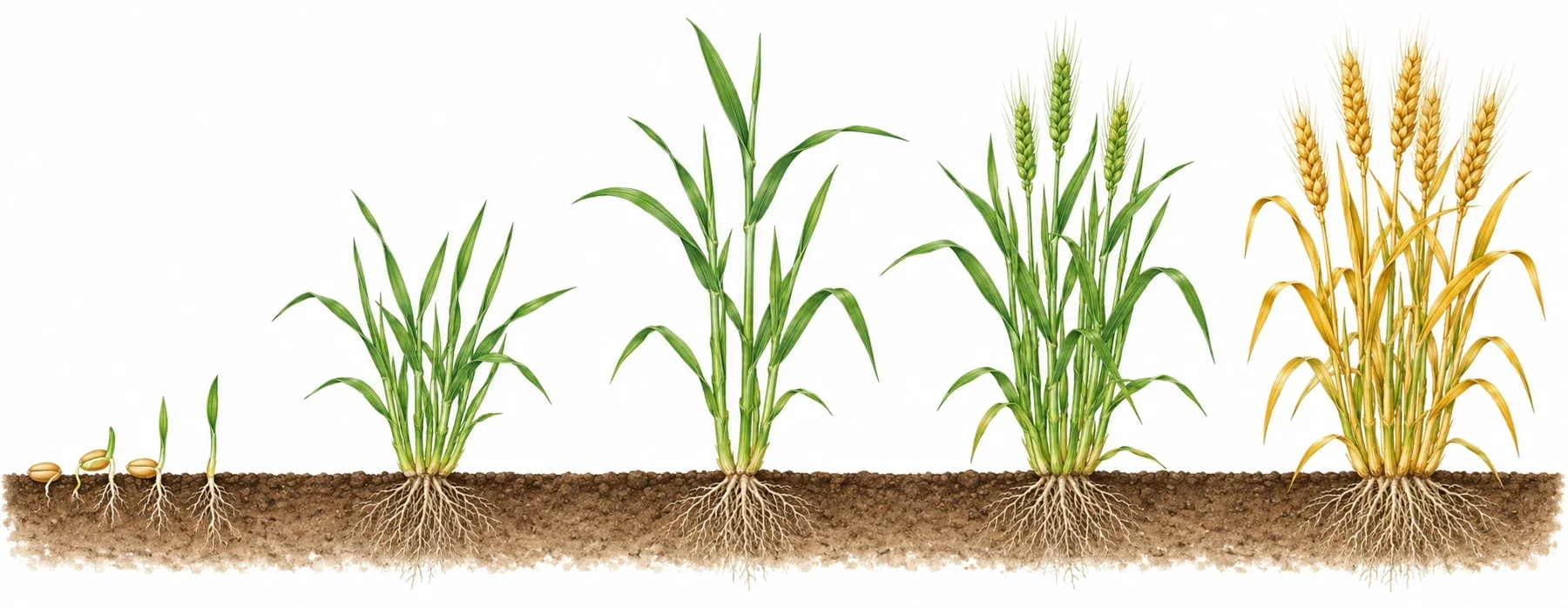
Crop Protection Throughout the Wheat Growing Season
Effective wheat crop protection depends on matching each application to the crop’s growth stage. As seasonal timing varies across Australia’s wheat-growing regions, treatment decisions should reflect field monitoring, local disease pressure and weather conditions.
Establishment
Prepare and sow using conventional farm machinery, then monitor crop emergence, weeds and early pests. Weed management may include pre-sowing or post-emergence control.
Tillering and Stem Elongation
Assess rust and other foliar diseases as the crop develops, including treatment needs at GS31–32. Applications should respond to field conditions and identified disease risk.
Flag Leaf
Protect the upper leaves at GS39. This is an important window for assessing drone application, taking disease risk, canopy coverage and suitable weather into account.
Heading and Grain Fill
Continue monitoring disease and the protection remaining from earlier treatments. Where further applications are needed, observe approved growth stages and withholding periods.
Maturity and Harvest
Plan harvesting and grain transport around crop maturity, grain quality and seasonal conditions, using conventional harvesting machinery.
Across the season, regular monitoring helps growers identify when treatment is needed and choose an appropriate application method. Drone spraying can support crop protection at suitable stages, alongside conventional machinery for sowing and harvest. All applications should follow local agronomic advice and applicable product labels, including aerial application conditions.
Drone Application When Timing Matters
Drones offer an additional crop protection option when wet soils restrict machinery access and treatment windows are short. For wheat growers, they can support timely fungicide, herbicide and insecticide applications where product labels permit and suitable coverage can be achieved.
Meet Phil and His Family Farm
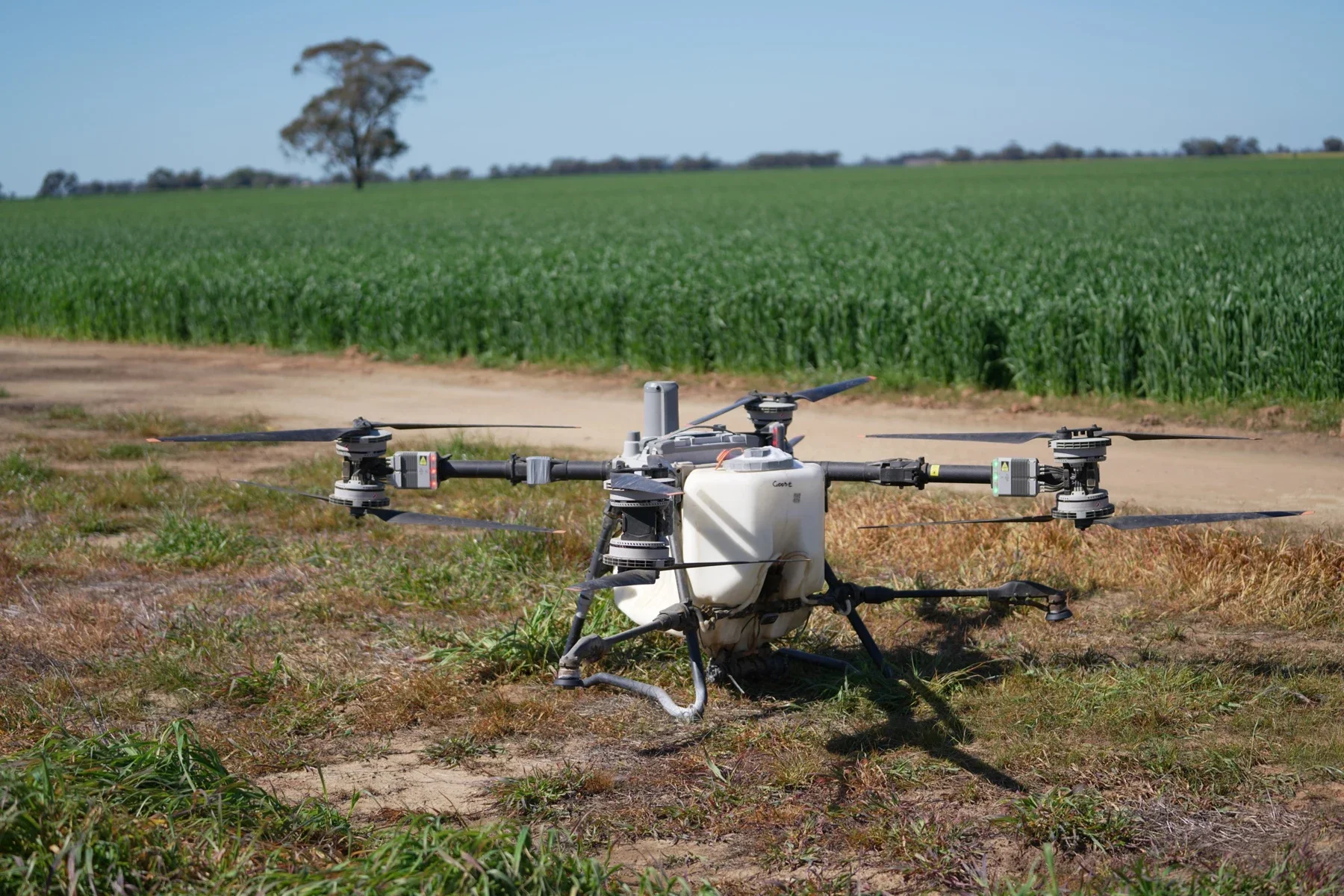
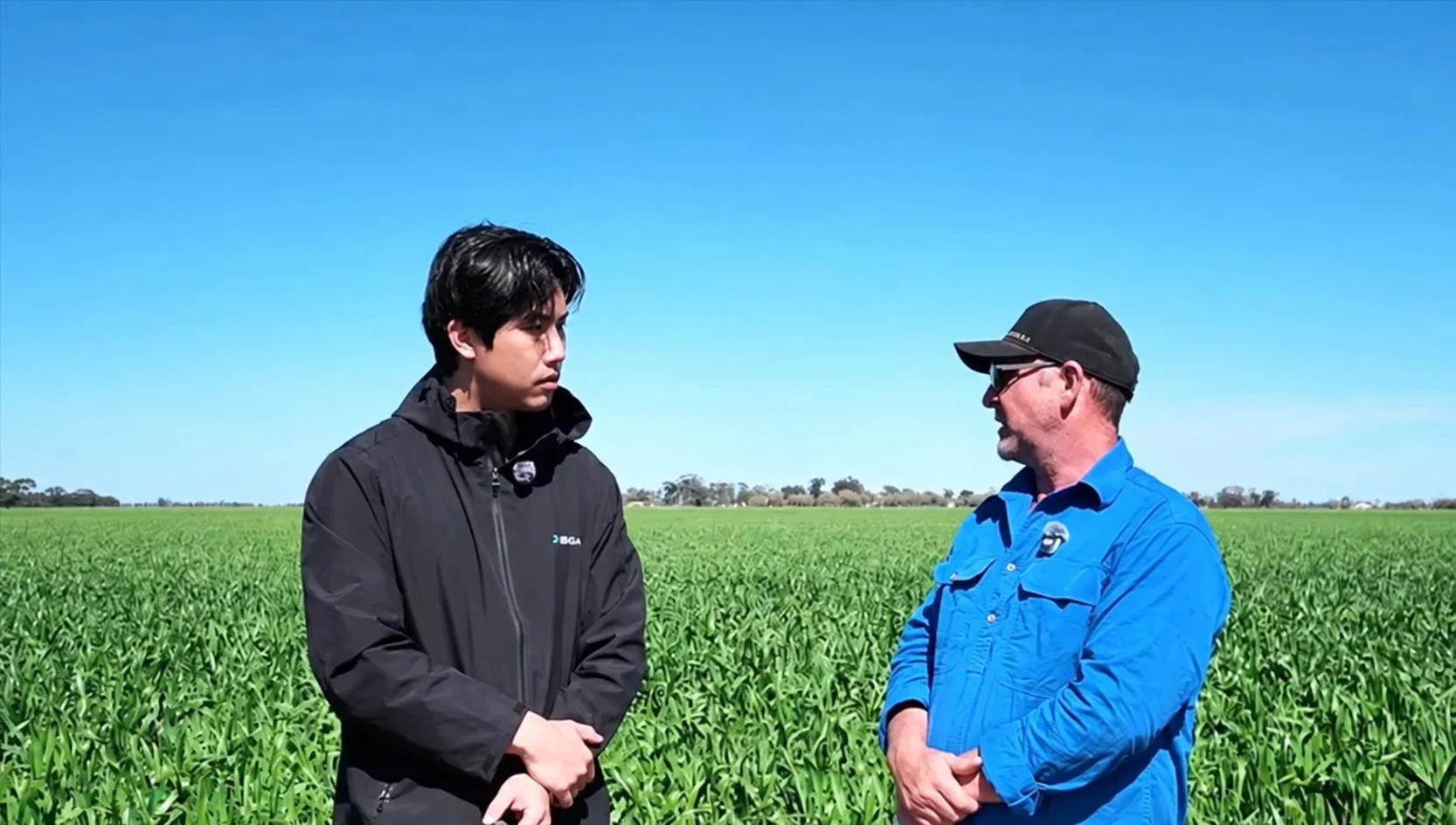
In Deniliquin, New South Wales, Phil operates a 2,500-hectare family farm, with 1,500 hectares dedicated to wheat. His crop protection programme combines two DJI AGRAS T100 drones with conventional farm machinery to meet seasonal needs.
A Seasonal Spraying Programme
The farm typically carries out four to five crop protection applications each year, guided by field conditions. Fungicide spraying is the main task, alongside suitable herbicide and insecticide applications.
Two T100 Drones Supporting Crop Protection
Two DJI AGRAS T100 drones support the spraying programme, providing an additional application option for managing the farm’s wheat crop.
Conventional Machinery for Core Farm Operations
Ground machinery continues to handle land preparation, sowing, harvest and transport, with drones taking on a complementary role in crop protection.
Phil’s farm illustrates how drone spraying can fit into an established wheat operation, with aerial and ground equipment serving different tasks throughout the season.
Challenges to Timely Wheat Spraying
On Phil’s farm, timely crop protection depends on field access, crop development and reliable operational support. Wet soils can delay machinery entry, while disease pressure and changing field conditions make it difficult to complete treatments within the available window.
Access to Wet Fields
Drone spraying is particularly relevant when soft ground prevents conventional sprayers from entering paddocks, including during flag-leaf protection and other time-sensitive treatments.
Choosing the Right Equipment
Conventional machinery remains productive in dry, open paddocks. Growers should compare field conditions, daily capacity and support requirements when choosing an application method.
Planning and Calibration
Map field boundaries and obstacles before spraying, then verify effective swath width and spray deposition within the crop canopy. Appropriate calibration helps match the application to the target crop.
By combining suitable field access with careful planning, drones can complement conventional machinery throughout the wheat season. Phil’s two-drone operation in Deniliquin, New South Wales, provides a practical example of how this approach fits into farm management.
How much the drone operating methods cost
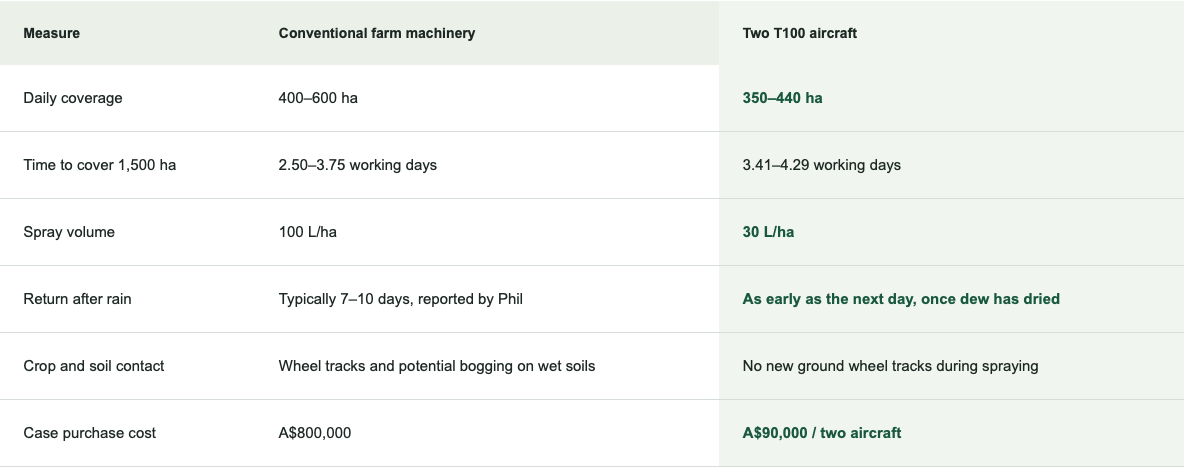
Two DJI AGRAS T100 drones offer earlier access after rain, use 70% less spray liquid and avoid new spraying wheel tracks. Their case purchase cost was also lower than the conventional machine. Although ground sprayers achieve higher daily coverage, drones provide flexibility when wet paddocks restrict access and crop protection timing matters. Results depend on suitable conditions and reliable support.
235 hectares.One flag-leaf treatment.
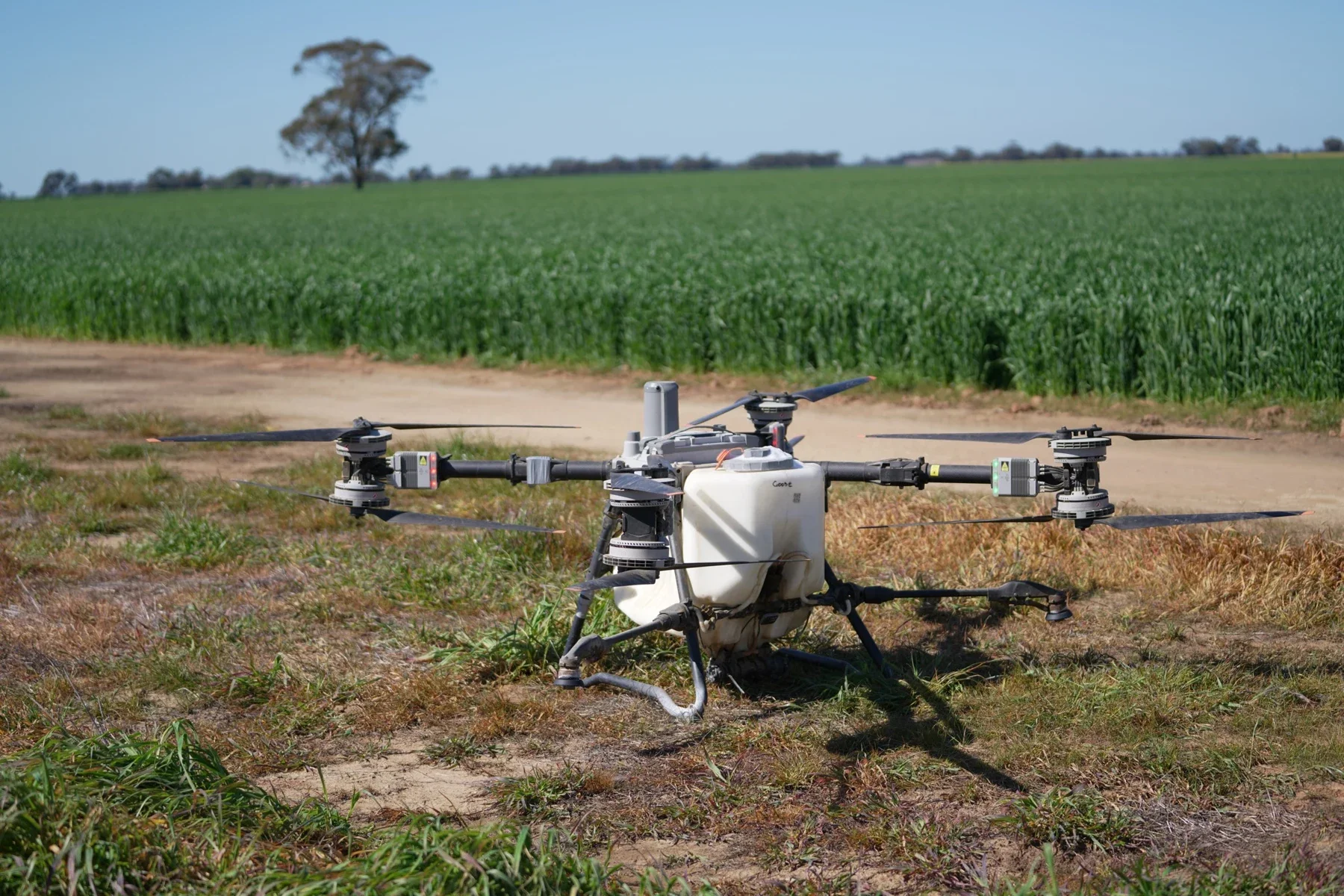
The DJI AGRAS T100 drones completed a 235-hectare flag-leaf fungicide application in Deniliquin in seven hours, averaging 33.6 hectares per hour combined. Spray-liquid volume was 70% lower than the conventional baseline, without implying reduced active ingredient rates. Phil reported satisfaction with their field performance, providing a practical example of drone spraying within his wheat crop protection programme.
Spray-liquid use: 7,050 L at 30 L/ha for 235 hectares, compared with the conventional baseline of 23,500 L at 100 L/ha.
Liquid reduction: 16,450 L less spray liquid, a 70% reduction. This does not imply a reduction in active ingredient.
Task completion: Two T100 drones completed the application in seven hours, averaging 33.6 ha/h combined.
A wider post-rain working window
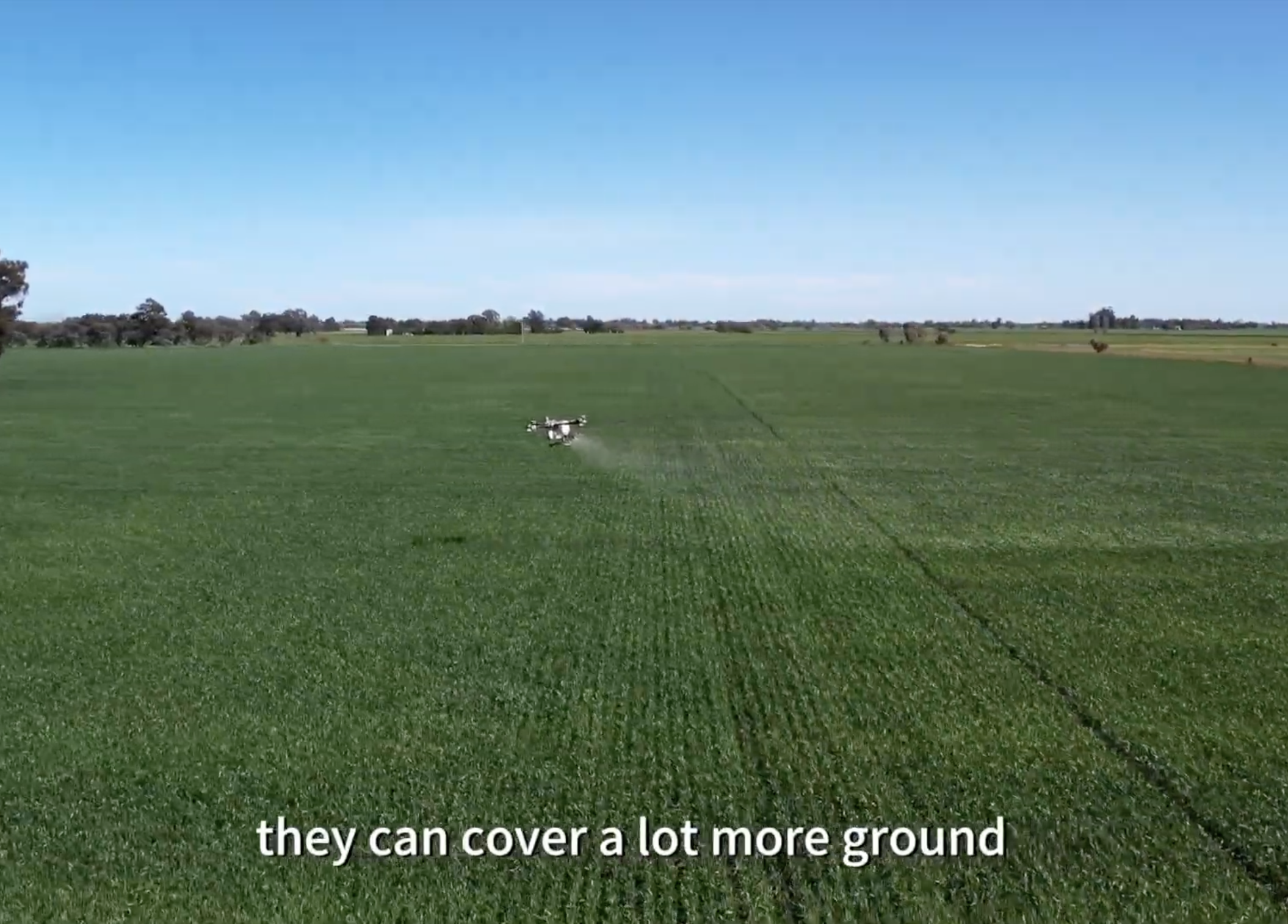
Earlier access after rain can give drones a longer working window, even with lower daily coverage than ground machinery. In an illustrative 14-day scenario for Phil’s 2,500-hectare farm, a ten-day delay leaves conventional equipment four working days to cover 1,600–2,400 hectares, potentially falling short by 100–900 hectares. Two T100 drones starting the next day would have 13 working days, providing a calculated capacity of 4,550–5,720 hectares. These figures represent modelled capacity, not measured results, and assume all remaining days offer suitable weather, leaf and application conditions.
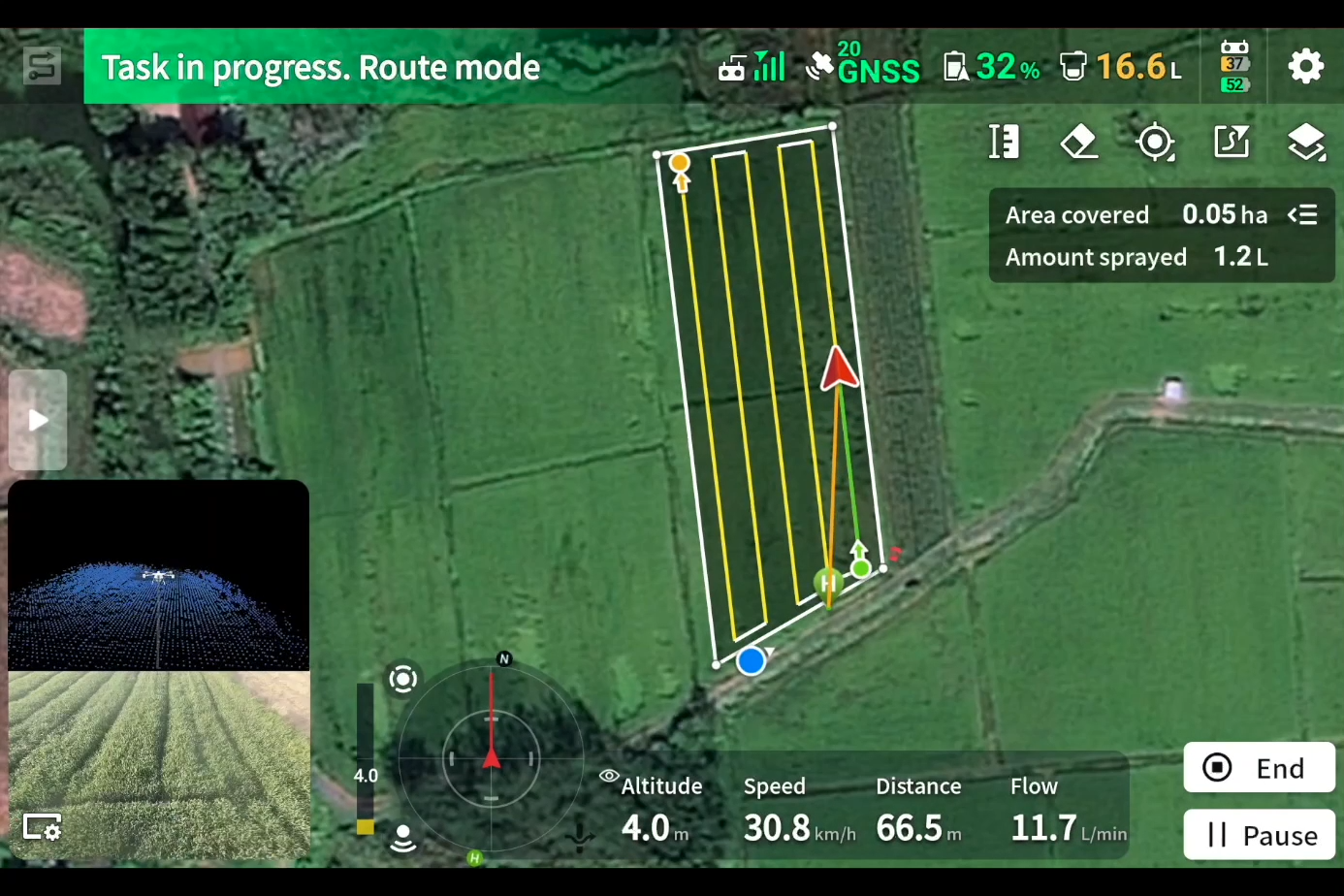
Spray volume: 30 L/ha.
Flight speed: 49 km/h.
Swath width: 9 m.
Flight height: 4 m.
Battery allocation: Three batteries per aircraft.
Staffing: Two operators supporting two T100 drones.
Charging support: One generator supplying three C12000 chargers, consuming approximately 45–60 L of diesel per day.
* These settings reflect Phil’s field case, not universal product specifications. Applications require field calibration and compliance with applicable product labels.
A lower maintenance budget
The case model budgets A$4,000 annually for maintaining two T100 drones, compared with A$16,000–40,000 for conventional machinery. Routine care includes cleaning the spray system, inspecting propellers and connections, monitoring battery condition and following scheduled maintenance.
* These are budget estimates, not verified lifetime costs; battery replacement and other additional expenses require separate allowances.
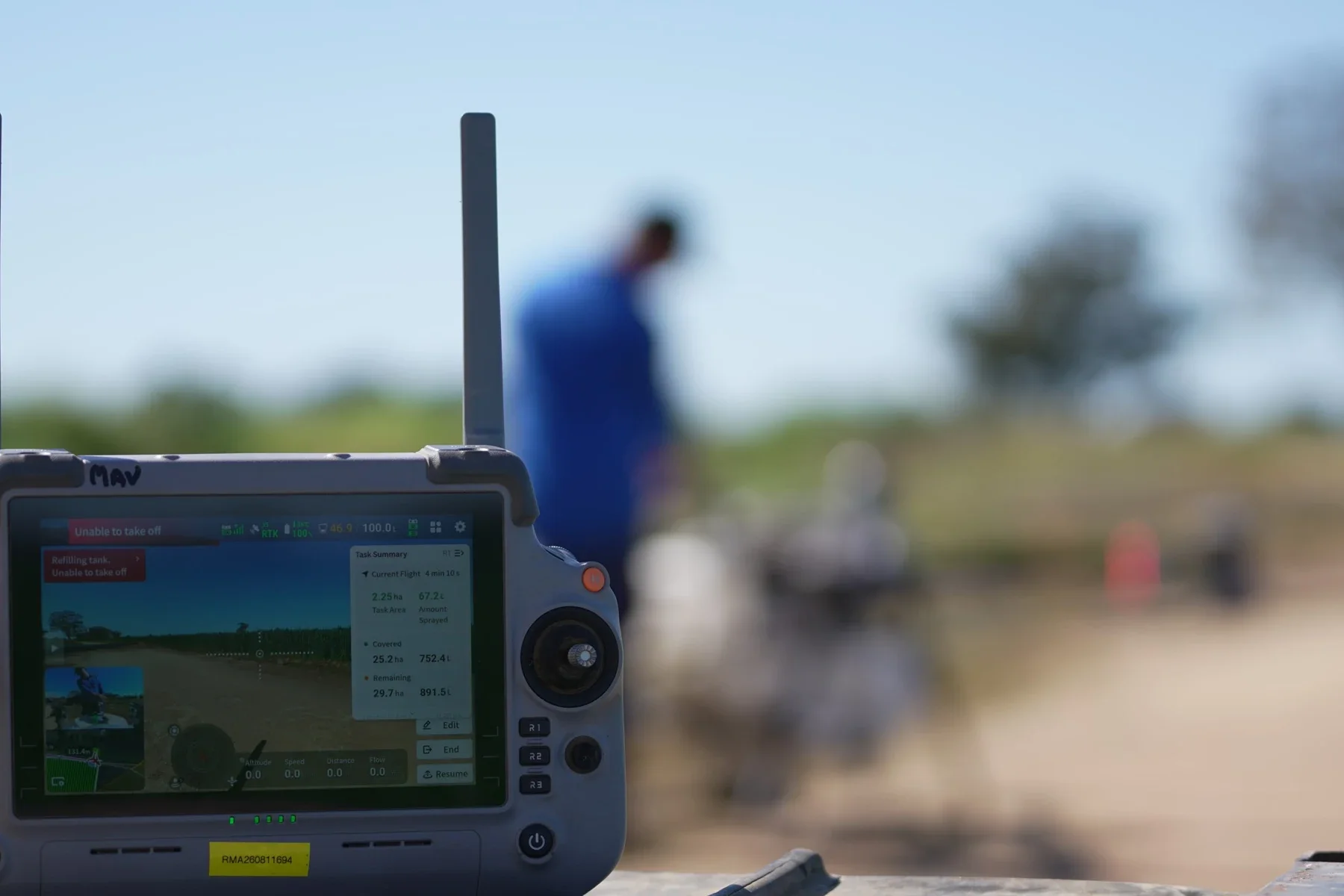
Familiar controls. Guided autonomous operation.
The T100 combines familiar flight controls with guided autonomous operation. Operators select the field and route, configure application settings, complete pre-flight checks and confirm the task before monitoring progress. Training supports daily operation, while appropriate qualifications, approvals and active supervision remain essential. Operators manage refilling, battery changes and intervention when needed.
Select the field and route: Confirm boundaries, obstacles and the take-off area.
Set application parameters: Configure spray volume, speed, route spacing and flight height, then complete pre-flight checks.
Slide to start: Check aircraft status and task settings, then follow the controller prompt to initiate autonomous operation.
Monitor and intervene: Supervise the aircraft and surroundings, refill, change batteries or pause the task as required.
Autonomous operation requires active supervision and appropriate qualifications. Follow the current T100 manual.
Make repeat operations easier to manage
A consistent digital workflow improves efficiency and simplifies repeated agricultural drone operations. By integrating field preparation, equipment calibration, real-time monitoring and accurate record keeping, operators can ensure consistent application quality, reduce operational errors and improve overall productivity while maintaining reliable records for future planning and performance evaluation.
Field Preparation: Confirm field boundaries, obstacles and sensitive areas.
Configuration & Calibration: Verify application settings and spray deposition.
Operation & Monitoring: Monitor weather, refills and battery changes.
Record Keeping & Review: Track coverage, flight paths, spray volumes and operation times.
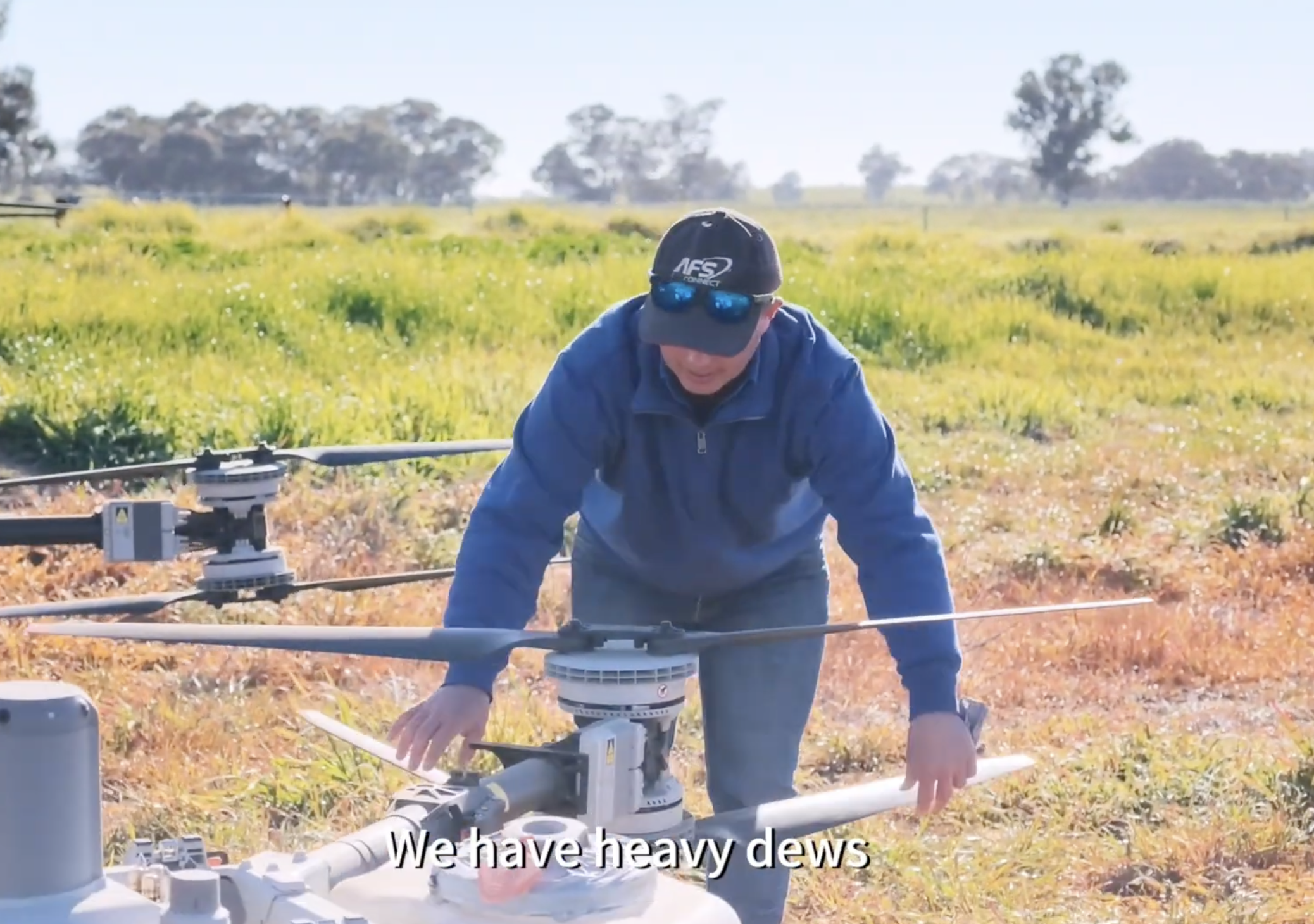
EE Talk With Phil Wheat Management Workflow
In this interview, Phil shares the challenges he faces, how DJI Agras drones have helped him tackle them, and what he’s learned along the way. Hear his firsthand experience and discover the difference this technology has made on his farm.